Fear and Greed Index Explained for Traders
Understanding investor psychology is essential for navigating financial markets successfully. Emotions often drive decisions more than logic, especially during periods of high volatility. Tools like the fear and greed index help traders measure market sentiment and identify whether participants are overly optimistic or excessively cautious. This insight can signal potential market reversals or continuation trends. By combining sentiment analysis with technical and fundamental tools, traders can make more balanced and informed decisions.
What Is the Fear and Greed Index?
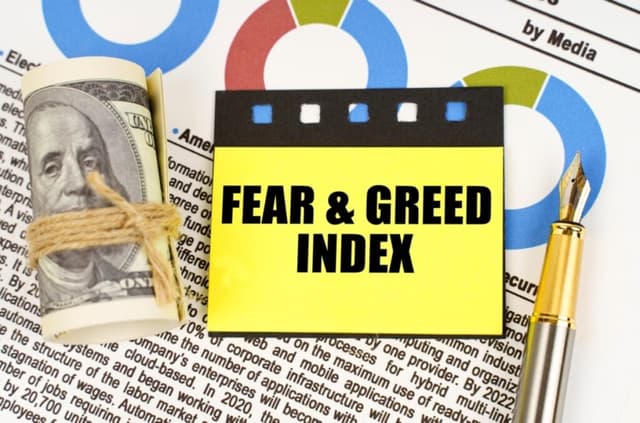
The fear and greed index is a powerful sentiment indicator designed to measure market psychology by tracking extreme emotions among investors. Developed to quantify the collective emotional state of traders, this index helps identify whether the market is driven by irrational exuberance or deep pessimism. Unlike traditional technical indicators that rely on price and volume data, the fear and greed index focuses on behavioral patterns—making it invaluable for understanding market cycles beyond raw numbers.
At its core, the index operates on a scale from 0 to 100, where lower values signal extreme fear and higher values indicate extreme greed. These extremes often precede market reversals, offering traders a contrarian edge. For example, when the fear and greed index hits the lowest levels, it may suggest an oversold condition ripe for a rebound, while peak greed levels could foreshadow a correction. The index is particularly useful in volatile markets, where emotions often drive prices more than fundamentals.
History and Purpose of the Index
The concept of measuring market sentiment isn’t new, but the modern fear and greed index was popularized in the early 2000s as a way to quantify emotional extremes in financial markets. Originally inspired by the work of economists and behavioral psychologists, the index was designed to fill a gap left by traditional indicators. While tools like moving averages or RSI focus on price action, they often fail to account for the emotional drivers behind those movements.
The fear and greed index was first introduced to the public by CNN Business in 2011, though similar sentiment gauges existed in academic research for decades.
Its purpose was clear: to provide a real-time snapshot of investor psychology, which historically precedes major market shifts. For instance, during the 2008 financial crisis, extreme fear levels corresponded with the market’s lowest points, while the dotcom bubble’s peak was marked by extreme greed. These historical patterns demonstrate how the index can act as an early warning system for market extremes.
How the Fear and Greed Index Works?
The fear and greed index is calculated using a weighted combination of several key components, each reflecting a different aspect of market sentiment. These components are continuously monitored and adjusted to ensure the index remains relevant. The methodology is designed to capture both short-term fluctuations and long-term trends in investor behavior.
To generate the index, data is collected from multiple sources, including market volatility, stock price momentum, market strength, safe-haven demand, and other sentiment indicators. Each component is assigned a specific weight based on its importance in reflecting market conditions. The final score is then normalized on a scale from 0 to 100, where:
- 0–25 indicates extreme fear
- 25–45 signals fear
- 45–55 represents a neutral zone
- 55–75 suggests greed
- 75–100 denotes extreme greed
Components of the Fear and Greed Index
The fear and greed index is built on seven distinct components, each contributing to the overall sentiment score. These components are carefully selected to reflect different facets of market psychology. Below is a breakdown of how each element influences the index:
Volatility
- Measures the degree of price fluctuations in the market.
- High volatility often signals fear, as investors react sharply to uncertainty.
- Low volatility may indicate complacency or greed, depending on market conditions.
Market Momentum
- Tracks the strength and direction of recent price movements.
- Strong upward momentum can push the index toward greed.
- Weak or declining momentum may trigger fear as traders anticipate corrections.
Stock Price Strength
- Evaluates the performance of high-capitalization stocks relative to the broader market.
- Outperformance by large-cap stocks often correlates with greed.
- Underperformance may signal fear, especially if small-cap stocks are leading the decline.
Safe Haven Demand
- Monitors the flow of capital into traditional safe assets like gold and bonds.
- Increased demand for safe havens typically drives the index toward fear.
- Reduced demand may reflect confidence, pushing the index toward greed.
Market Breadth
- Assesses the number of stocks advancing versus declining in a given period.
- Broad market participation (many stocks rising) often aligns with greed.
- Narrow participation (few stocks advancing) may indicate fear or distribution.
Put and Call Options
- Compares the volume of put options (bearish bets) to call options (bullish bets).
- High put volume relative to calls suggests fear.
- High call volume relative to puts may signal greed.
Junk Bond Demand
- Tracks the demand for high-yield, high-risk bonds.
- Strong demand for junk bonds can indicate greed, as investors seek higher returns.
- Weak demand may reflect fear, as investors prefer safer assets.
Understanding Index Levels
The fear and greed index is divided into five distinct zones, each corresponding to a different emotional state of the market. Recognizing these zones is essential for interpreting the index’s signals accurately. Below is a detailed explanation of what each level represents:
Extreme Fear (0-20)
- Market Condition: Investors are highly pessimistic, often selling assets at fire-sale prices.
- Trading Opportunity: Historically, extreme fear levels have preceded significant market rebounds.
- Example: During the 2008 financial crisis, the index frequently dipped below 10, followed by rallies as panic subsided.
Fear (20-40)
- Market Condition: Caution dominates, with investors adopting a defensive stance.
- Trading Opportunity: A balanced approach may be best, as the market is neither overly bullish nor bearish.
- Example: After sharp corrections, the index often lingers in this range as traders wait for clarity.
Neutral (40-60)
- Market Condition: Market sentiment is balanced, with neither extreme fear nor greed driving prices.
- Trading Opportunity: Ideal for trend-following strategies, as the market is in a steady state.
- Example: During stable economic periods, the index typically hovers around 50, reflecting neutral sentiment.
Greed (60-80)
- Market Condition: Investors are overly optimistic, often chasing performance without regard for risk.
- Trading Opportunity: Caution is advised, as greed can lead to overbought conditions and potential reversals.
- Example: In bull markets, the index frequently climbs into this range before pullbacks occur.
Extreme Greed (80-100)
- Market Condition: Investors are euphoric, ignoring fundamental risks in pursuit of higher returns.
- Trading Opportunity: High-risk assets may be due for a correction, presenting opportunities for contrarian traders.
- Example: The dotcom bubble saw the index consistently above 90 before the crash of 2000.
For traders using Afaq, recognizing these levels can help in timing entries and exits more effectively. The key is to avoid emotional trading decisions and instead use the index as a tool for objective analysis.
How to Interpret the Fear and Greed Index?
Interpreting the fear and greed index requires more than just reading the current score—it involves understanding the context behind the number. The index is most effective when used in conjunction with other technical and fundamental tools. Below are key principles for accurate interpretation:
- Contrarian Approach: Extreme levels (either fear or greed) often signal potential reversals. For example, an index reading of 90 may indicate that the market is overbought, while a reading of 10 could suggest oversold conditions.
- Trend Confirmation: Use the index to confirm trends rather than predict them. If the market is in an uptrend and the index is in the greed zone, it may still be safe to stay long, but with tighter risk management.
- Divergence Analysis: Watch for divergences between the index and price action. For instance, if the market makes new highs but the index remains neutral or declines, it could signal weakening momentum.
Cross Referencing with Technical Indicators
The fear and greed index should never be used in isolation. Combining it with technical tools enhances its predictive power. Here’s how to integrate it effectively:
Moving Averages (MA)
Compare the index’s position with key moving averages (e.g., 50-day or 200-day MA).
Example: If the index is in extreme greed (80–100) but the 200-day MA is still declining, the market may be in a late-stage rally rather than a sustainable uptrend.
Relative Strength Index (RSI)
+ greed zone (60–80) = Higher likelihood of a pullback.
Oversold RSI (below 30) + fear zone (20–40) = Potential short-term bounce, but watch for deeper declines if fundamentals weaken.
Bollinger Bands
If the index is in extreme fear (0–20) while the price is near the lower Bollinger Band, it may signal a high probability reversal.
Conversely, extreme greed (80–100) near the upper band could indicate a topping pattern.
Volume Analysis
High volume during fear (2040) suggests panic selling, which may lead to a stronger rebound.
Low volume in greed (60–80)could indicate complacency, increasing the risk of a sharp correction.
For traders following Afaq Trade, pairing the fear and greed index with these tools creates a multilayered approach to risk management.
Using the Index in Trading Strategies
The fear and greed index is most powerful when integrated into structured trading strategies. Below are two proven approaches, along with their risk-reward profiles and practical applications.
Contrarian Strategy
Contrarian trading involves betting against the prevailing sentiment, which the fear and greed index excels at identifying. This strategy works best in efficient markets where emotions drive mispricing.
Key Principles of Contrarian Trading with the Index
- Buy in Extreme Fear (020): Historically, markets have rebounded from these levels, especially if fundamentals remain intact.
- Sell in extreme greed (80–100): Overbought conditions often lead to corrections, particularly in speculative assets.
- Avoid Neutral Zones (4060): The index here provides little edge, as sentiment is balanced.
Step-by-Step Contrarian Strategy
- Identify Extreme Levels: Wait for the index to reach 020 (fear) or 80100 (greed).
- Confirm with Price Action: Ensure the market is not in a clear downtrend (for long entries) or uptrend (for short entries).
- Set Entry Rules:
- when the index is < 20, and the price is near support (e.g., 200-day MA).
- when the index is > 80 and the price is near resistance (e.g., all-time highs).
Trend Confirmation
Trend confirmation is a crucial step in trading, as it helps traders validate whether a market move is likely to continue or reverse. By confirming trends, traders can avoid false signals and improve the accuracy of their entries and exits. This approach relies on combining indicators, price action, and volume analysis to ensure that the market direction is supported by strong momentum.
Key Principles of Trend Confirmation
- Follow the Primary Trend: Trade in the direction of the dominant trend (uptrend or downtrend) to increase probability.
- Use Multiple Indicators: Combine tools like moving averages, MACD, or RSI to confirm momentum.
- Watch Volume Strength: Strong trends are usually supported by increasing volume.
Avoid Weak Signals: Sideways or low-volume markets often produce false confirmations.
Step-by-Step Trend Confirmation Strategy
- Identify the Trend: Use moving averages (e.g., 50-day and 200-day) to determine the overall direction.
- Confirm with Indicators: Check if indicators align with the trend (e.g., RSI above 50 in an uptrend).
- Validate with Price Action: Look for higher highs and higher lows (uptrend) or lower highs and lower lows (downtrend).
Set Entry Rules: - Long Entry: Enter when the trend is bullish, and indicators confirm momentum.
- Short Entry: Enter when the trend is bearish, and indicators confirm downward pressure.
FAQs
Can beginners use the fear and greed index effectively?
Yes, beginners can use the fear and greed index as a simple tool to understand market sentiment. It helps them identify whether the market is overly fearful or greedy without needing complex analysis. However, it should be used alongside basic technical or fundamental tools for better accuracy.
What are the limitations of the fear and greed index?
The index does not provide exact entry or exit signals, making it less reliable as a standalone tool. It is also based on sentiment, which can stay extreme for long periods without immediate reversals. Additionally, it may not fully reflect sudden market events or fundamental changes.
How does market sentiment impact price movements?
Market sentiment influences buying and selling behavior, often driving prices beyond their true value. When optimism is high, prices tend to rise due to increased demand, while fear leads to selling pressure and price declines. These emotional cycles can create trends, volatility, and potential reversal opportunities.