What Is market volatility index VIX?
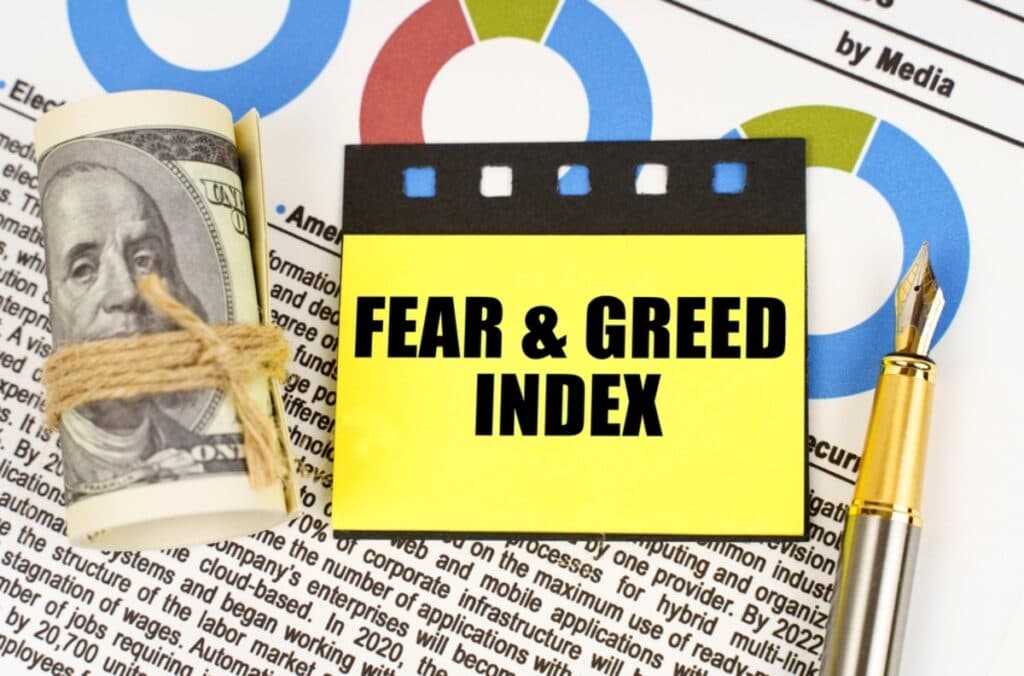
Understanding market behavior is essential for making informed trading decisions in financial markets. One of the key tools used by traders is the market volatility index, which measures the level of uncertainty and expected price fluctuations. It reflects how investors feel about future market conditions, whether they anticipate stability or increased risk. Higher readings often signal fear and potential turbulence, while lower levels indicate confidence and calmer markets. By analyzing this index, traders can better manage risk and adapt their strategies accordingly.
The Market Volatility Index (VIX)
The Market Volatility Index universally known as the VIX is one of the most closely watched gauges in global finance. Developed by the Chicago Board Options Exchange (CBOE), it measures the market’s expectation of near-term volatility by analyzing the implied volatility embedded in S&P 500 index options. Often called the “fear gauge,” the VIX does not predict the direction of price movement whether stocks will rise or fall but quantifies how dramatically the market expects prices to swing over the next 30 days.
What distinguishes the VIX from most market indicators is its forward-looking nature. Rather than reflecting what has already happened through historical price data, it captures what options market participants collectively expect to happen. This makes it a real-time barometer of market anxiety: when the VIX is elevated, uncertainty and fear dominate; when it is low, confidence or complacency prevails. For anyone navigating financial markets, understanding the VIX is not optional it is foundational.
Why Volatility Matters in Financial Markets?
Volatility reflects how much prices fluctuate in a market, making it a key factor that influences trading decisions and risk levels.
- High volatility indicates uncertainty with sharp price swings, creating both opportunities and risks.
- Low volatility suggests stability, but may hide underlying risks that can lead to sudden market moves.
- Some traders benefit from volatility using momentum, options, or leveraged strategies.
- Long-term investors often view volatility as a risk and use hedging to protect their portfolios.
- The VIX measures market sentiment, turning uncertainty into a clear, trackable indicator.
- It provides a standardized way to compare market conditions across time and different assets.
How the VIX Reflects Market Sentiment?
The VIX is widely regarded as a key indicator of market sentiment, reflecting the level of fear or confidence among investors. Rather than measuring price direction directly, it captures how market participants are positioning themselves through options activity. By analyzing changes in the VIX, traders can gain insights into potential market turning points and overall risk perception. When combined with other indicators, it becomes a powerful tool for understanding the emotional dynamics driving financial markets.
- Acts as a psychological gauge of fear and confidence in the market.
- Rises when demand for protective options (puts) increases during uncertainty.
- Falls when market confidence improves and hedging demand declines.
- Often behaves as a leading indicator, moving ahead of price changes.
- Becomes more reliable when combined with volume, Put/Call ratio, and volatility measures.
- Helps identify whether market moves are strong trends or weak, temporary reactions.
How the Market Volatility Index Is Calculated?
The VIX calculation is more sophisticated than most widely used market indicators, incorporating options pricing theory and statistical modeling to produce a single, forward-looking volatility estimate.
- Selection of S&P 500 options (puts and calls) with expirations within 30 days and strike prices around ±25% of the current index level.
- Extraction of implied volatility by matching market prices with theoretical Black-Scholes values.
- Use of implied volatility (forward-looking) instead of historical volatility (past data).
- Construction of a volatility surface showing volatility across strikes and expirations.
- Observation of volatility skew, where out-of-the-money puts have higher implied volatility.
- Calculation of a weighted average, giving more importance to near-the-money options.
- Annualize the 30-day volatility estimate by multiplying by 100 to produce the VIX value.
- Final result reflects expected market volatility (e.g., VIX 20 ≈ 20% expected annual volatility).
- Methodology is forward-looking and based on real market transactions, not just historical data.
What the Market Volatility Index Indicates?
Understanding what the market volatility index indicates is essential for evaluating overall market sentiment and risk levels. It provides insight into investor expectations of future volatility, helping traders anticipate potential uncertainty or stability in the market.
Fear vs. Confidence in the Market
The VIX’s primary message is about the emotional temperature of the market — the balance between fear and confidence at any given moment. These two states produce structurally different market environments with distinct implications for strategy.
In high-fear environments (elevated VIX), risk premiums expand across asset classes, correlations between assets rise (most things fall together), liquidity tightens, and bid-ask spreads widen. These conditions reward defensive positioning, hedging, and patience. In high-confidence environments (low VIX), risk premiums compress, assets tend to trend more smoothly, and momentum strategies perform well. However, prolonged low-VIX environments are frequently followed by sharp volatility episodes — the complacency that low volatility breeds creates the conditions for its own reversal.
Interpreting High and Low Values
- VIX above 40 Extreme Panic: Readings in this range reflect genuine market crises liquidity events, systemic shocks, or cascading selling. Historically, VIX peaks above 40 have often (though not always) preceded significant market recoveries, as extreme fear tends to accompany oversold conditions. During the 2020 COVID-19 market crash, the VIX reached 82.69 its highest recorded level — before the S&P 500 staged one of its most powerful recoveries in history. However, timing contrarian entries during extreme VIX spikes is treacherous; false rallies can occur before the actual bottom is established.
- VIX between 20 and 40 — Elevated Uncertainty: This range reflects meaningful stress — geopolitical tensions, major economic data surprises, or significant corporate events. It is not unusual during earnings seasons, Federal Reserve policy pivots, or periods of macroeconomic uncertainty. This is the most common environment for volatility arbitrage strategies, where traders exploit the gap between implied (VIX-reflected) and realized volatility.
- VIX between 15 and 20 — Normal Conditions: Moderate volatility reflecting typical market fluctuations. Neither extreme fear nor excessive complacency. Both long and short strategies can perform well in this environment depending on sector dynamics and individual trade setups.
- VIX below 15 — Complacency Zone: Historically associated with periods of excessive market confidence. The danger in this zone is not what is happening but what may be building beneath the surface. The period from 2017 to early 2018, when the VIX averaged around 12 and frequently touched 10, was followed by a sharp volatility eruption in February 2018 that caught many traders off guard. Low VIX does not mean low risk — it means the market is currently not pricing risk heavily.
Historical Behavior of the Market Volatility Index
The VIX’s history since its introduction in 1993 reveals consistent patterns that inform how traders interpret current readings.
Major volatility spikes
have been tied to identifiable crisis events. The 1997 Asian Financial Crisis pushed the VIX toward 40. The 2008 crisis peak of 80.86 was the record at the time, later surpassed by the COVID-19 spike of 82.69 in March 2020, reflecting the most extreme market panic since the Great Depression as the global banking system faced systemic collapse. The 2010 Flash Crash generated a brief but violent spike as algorithmic trading triggered cascading sell orders.
The 2015–2016 oil price collapse and associated global growth fears pushed the VIX to approximately 50. The 2020 COVID-19 crash produced the all-time high of 82.69, followed by rapid central bank intervention and an equally rapid market recovery.
Prolonged low-volatility regimes
are equally instructive. The 2017 calendar year saw the VIX average approximately 12 a period of exceptional market calm. The years 2012–2014 also produced extended low-VIX periods as post-crisis recovery solidified. These periods of suppressed volatility have consistently set the stage for eventual volatility explosions, as complacency reduces hedging activity and leaves markets vulnerable to shock.
Seasonal patterns
are observable but not mechanically reliable. The VIX tends to show elevated readings in January (post-year-end profit-taking and repositioning), during earnings seasons in February, May, August, and November, and around Federal Reserve policy meetings — particularly when the market expects a significant or unexpected decision. Recognizing these seasonal tendencies allows traders to prepare rather than react.
The VIX’s long-term average sits in the 18–20 range, providing a mean-reversion reference point: readings significantly above this average tend to revert downward over time, and readings significantly below it tend to eventually revert upward.
How Traders Use the Market Volatility Index?
Understanding how traders use the market volatility index is essential for making informed trading decisions. By analyzing its movements, traders can gauge market sentiment, manage risk, and identify potential opportunities in changing market conditions.
Risk Management Strategies
The VIX’s most practical application for most market participants is risk management rather than speculation. Several approaches are widely used.
- Portfolio hedging using VIX-related instruments allows investors to offset equity downside during high-fear environments. Buying VIX call options provides direct exposure to volatility spikes; as the VIX rises during a market selloff, the value of VIX calls increases, partially offsetting portfolio losses. VIX futures serve a similar purpose for more sophisticated participants. However, they require careful management of contango effects — the tendency for VIX futures to trade at a premium to spot, which erodes value over time in calm markets.
- Volatility ETFs and ETNs — products like VXX (long VIX futures) and SVXY (short VIX futures exposure) — provide accessible volatility exposure for traders who do not trade options or futures directly. These products are powerful but require an understanding of their structural decay characteristics, particularly VXX, which consistently loses value in low-volatility environments due to rolling futures contracts at a premium.
- Dynamic stop-loss adjustment uses VIX readings to calibrate appropriate stop distances. In high-VIX environments, wider stops are needed to accommodate larger price swings without being stopped out prematurely; in low-VIX environments, tighter stops are appropriate. A fixed stop-loss percentage applied uniformly across different VIX regimes will systematically underperform.
- Asset allocation shifts based on VIX levels involve reducing equity exposure when the VIX is elevated (higher probability of continued volatility) and increasing it when the VIX is low (more stable conditions). This is a systematic version of the intuitive risk-on/risk-off framework.
Timing Entries and Exits
Beyond risk management, the VIX provides timing signals that many traders incorporate into their strategies.
- Contrarian entry timing exploits the VIX’s mean-reverting tendency. Historically, periods of extreme VIX elevation (above 30–35) have been associated with attractive long-term buying opportunities in equities, as fear-driven selling creates valuation discounts. The challenge is identifying where within the VIX spike to enter — buying on the first spike may mean buying into further selling, while waiting for the VIX to begin declining from its peak provides more confirmation.
- Mean reversion trading specifically exploits the VIX’s tendency to return to its long-term average. Traders short volatility (through VIX puts or inverse ETFs) when the VIX is significantly above its historical average and long volatility when it is significantly below, anticipating reversion in both directions.
- Volatility arbitrage involves exploiting mispricings between the VIX (implied volatility) and realized volatility — the actual volatility experienced by the market. When implied volatility as measured by the VIX significantly exceeds realized volatility, traders sell premium through strategies like straddles or strangles, collecting the difference between what the market feared and what actually occurred. Platforms like AFAQ Trade provide the charting and analytical tools needed to track both implied and realized volatility simultaneously and identify these premium-selling opportunities systematically.
Limitations of the Market Volatility Index
Understanding the limitations of the market volatility index is essential for using it effectively in trading. While it provides valuable insight into market sentiment, it should not be relied on as a standalone indicator for decision-making.
Not a Direct Predictor of Price Direction
The VIX’s most significant limitation — and the most common source of misinterpretation — is that it measures expected magnitude of price movement, not direction. A VIX of 40 tells you the market expects large swings; it says nothing about whether those swings will be up or down. Traders who automatically interpret high VIX as a sell signal and low VIX as a buy signal are applying the indicator incorrectly and will generate losing signals in environments where high volatility accompanies upward price movement or where low volatility precedes further rallies.
Short-Term Focus
The VIX’s 30-day window makes it inherently a short-term indicator. It captures near-term market anxiety and pricing of imminent risk events, but tells relatively little about structural medium or long-term market conditions. A VIX that spikes around a specific data release or central bank meeting may normalize within days, making it an unreliable guide for investment decisions with longer time horizons. Long-term investors who adjust portfolios heavily based on short-term VIX movements risk overtrading in response to temporary, event-driven volatility spikes that quickly resolve.
Additional limitations include:
The VIX specifically measures S&P 500 volatility expectations and cannot be directly applied to other indices, individual stocks, or non-equity asset classes without modification. Currency, commodity, and fixed income markets have their own volatility measures that may diverge significantly from the VIX. In highly distorted options markets — such as immediately following a major market disruption — the VIX calculation can be temporarily skewed by illiquid or mispriced options, producing readings that overstate or understate actual market expectations. Finally, the widespread awareness and use of the VIX has made it subject to some degree of self-fulfilling dynamics, where traders position around anticipated VIX movements in ways that can amplify its signals beyond what underlying market conditions might otherwise support.
FAQs
How does the market volatility index relate to stock market performance?
The VIX and the S&P 500 have a well-documented inverse relationship: when equity markets decline sharply, the VIX typically rises — often dramatically — as demand for protective options surges. Conversely, rising equity markets are usually accompanied by a declining or stable VIX. This inverse correlation averages around −0.7 to −0.8, making it one of the strongest consistent relationships in financial markets.
What are the limitations of using the market volatility index?
The primary limitations are its directional neutrality (it measures expected magnitude, not direction), its 30-day short-term focus (limiting usefulness for longer investment horizons), its specificity to S&P 500 options (not directly transferable to other markets), and its susceptibility to distortion during illiquid or disrupted options markets.
How can beginners interpret and apply the market volatility index effectively?
Beginners should start with a simple framework: VIX below 15 signals a calm, potentially complacent market; 15–25 reflects normal conditions; 25–35 indicates elevated stress; above 35 signals extreme fear. Rather than using precise VIX thresholds to trigger trades, beginners are better served by using the VIX directionally — is it rising or falling? — as a sentiment context for other decisions.