What Is Consumer Price Index (CPI)?
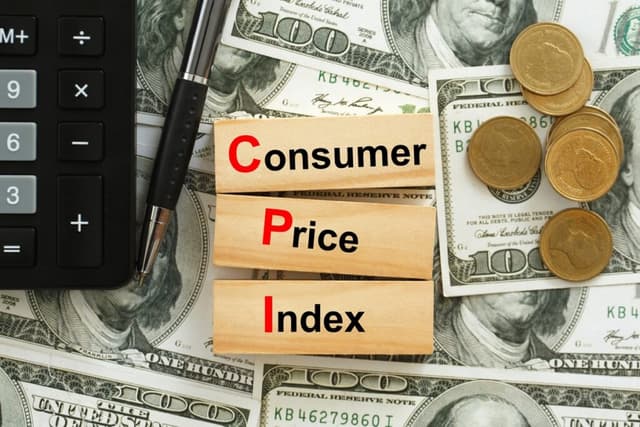
The Consumer Price Index is one of the most closely followed economic indicators because it measures changes in household prices over time. It helps explain inflation, purchasing power, wage adjustments, borrowing costs, savings returns, and monetary-policy expectations. For traders, CPI releases may also trigger sharp movements in currencies, bonds, equities, gold, and other markets when the published result differs from forecasts. This AFAQ guide explains how CPI is calculated, the difference between headline and core readings, and how to interpret monthly and annual data. It also covers global methodologies, household effects, market reactions, practical tracking tools, and the risks of treating one release as a complete trading signal.
What Is the Consumer Price Index?
The Consumer Price Index measures the average change in prices paid by consumers for a defined basket of goods and services. National statistical agencies collect prices from retailers, service providers, housing samples, and other sources, then combine those observations using expenditure weights that reflect how households typically allocate their spending.
The exact basket and methodology vary between countries, but most indices cover several broad spending categories.
Main CPI Basket Categories
Common categories include food and non-alcoholic beverages, housing and rent, utilities, household furnishings, clothing and footwear, transport, fuel, medical services, recreation, education, communication, restaurants, hotels, and personal services.
The weights assigned to these categories matter because households do not spend equal amounts on every item. A small price increase in a heavily weighted category, such as housing, may have a greater effect on the overall index than a larger increase in a category representing a smaller share of expenditure.
A Simple CPI Calculation Example
Assume a representative basket costs 1,000 monetary units in the base period and 1,050 in the current period.
The simplified formula is:
CPI = (Current basket cost ÷ Base-period basket cost) × 100
Using the example:
CPI = (1,050 ÷ 1,000) × 100 = 105
An index level of 105 means that the basket is 5% more expensive than it was during the base period.
Analysts may then compare the current index with the previous month or with the same month one year earlier to calculate monthly or annual inflation.
Official calculations are more complex. Statistical agencies regularly update samples and weights, account for product substitutions, adjust for quality changes, and use methodological procedures intended to keep the index representative over time.
Why Is CPI Important?
CPI matters because it connects changes in prices with household purchasing power, business planning, wage negotiations, public benefits, savings, investment returns, and monetary-policy decisions.
When prices rise faster than household income, consumers can purchase fewer goods and services with the same amount of money. When inflation slows, purchasing power may stabilize, although the general price level usually remains higher than it was previously.
Inflation also changes the real return on savings and investments. A nominal return of 5% does not produce a 5% gain in purchasing power when inflation is 4%.
In simplified terms:
Approximate real return = Nominal return − Inflation rate
In this example:
5% − 4% = approximately 1%
This approximation excludes taxes, fees, compounding, and differences between personal inflation and the published index.
CPI, Interest Rates, and Monetary Policy
Central banks monitor inflation when assessing whether financial conditions are too loose, too restrictive, or broadly appropriate.
A stronger-than-expected inflation reading may increase expectations that interest rates will remain elevated for longer. A weaker reading may strengthen expectations of future rate cuts, particularly when other indicators also point to slower demand or weaker labor-market conditions.
However, CPI is not the only measure used by central banks. The US Federal Reserve formally targets inflation using the Personal Consumption Expenditures price index, while the European Central Bank uses the Harmonised Index of Consumer Prices. CPI remains highly visible and important, but the correct interpretation depends on the country and the central bank’s official framework.
Changes in inflation expectations can influence government bond yields, mortgage rates, business borrowing costs, equity valuations, currency demand, gold, and broader market risk appetite.
The relationship is not mechanical. A high reading may have a limited market effect when it was already expected, is driven by a temporary component, or is offset by weak economic activity.
How to Read a CPI Release Like a Market Participant?
AFAQ readers should evaluate inflation data through a structured process instead of reacting only to the headline number. The following steps help separate the market surprise from the broader economic meaning.
1. Compare the Actual Figure With the Forecast
Markets often price expectations before the official release.
A high reading may produce little reaction when it matches the consensus forecast. A modest reading may trigger a larger move when it is materially above or below expectations.
The market surprise can be expressed conceptually as:
Inflation surprise = Actual CPI − Expected CPI
The larger the gap, the more likely investors are to reassess interest-rate and policy expectations.
2. Check Monthly and Annual Changes
The year-on-year rate measures price changes over twelve months, while the month-on-month reading provides a more recent view of inflation momentum.
Annual comparisons can be affected by base effects. A falling annual inflation rate does not necessarily mean prices declined during the latest month. It may mean they increased more slowly than during the comparison period.
3. Compare Headline and Core Measures
A headline increase driven primarily by fuel may be interpreted differently from broad inflation across housing, services, transport, medical care, and other categories.
Persistent core or services inflation may continue influencing rate expectations even when energy prices decline.
4. Review the Detailed Components
The composition of inflation can matter as much as the total figure.
Traders and analysts may review shelter, wage-sensitive services, food, transport, used vehicles, medical costs, and energy to determine whether inflation is broad-based, temporary, or concentrated.
5. Check Revisions and Methodology Notes
Previous figures may be revised, seasonal-adjustment factors may change, and basket weights may be updated.
Reliable interpretation should use the latest release from the official statistical agency rather than an isolated screenshot, social-media post, or headline without context.
6. Connect the Release to the Central Bank’s Framework
The same inflation surprise can produce different market outcomes depending on growth, employment, financial stability, previous guidance, and the central bank’s current priorities.
CPI is one input within a broader decision-making process. It is not an automatic instruction to buy or sell a financial instrument.
How Can CPI Affect Major Asset Classes?
The market impact of inflation depends on expectations, policy implications, positioning, growth, liquidity, and the structure of the instrument being traded.
Currencies
Currencies may react when inflation changes expectations for interest-rate differences between economies.
A stronger-than-expected release may support a currency if it increases the probability of tighter policy. However, the outcome also depends on growth, external balances, risk sentiment, and whether the surprise was already reflected in prices.
Currencies operating under fixed or tightly managed exchange-rate systems require a different framework. Domestic inflation may affect competitiveness and real exchange rates without producing a large immediate move in the nominal exchange rate.
Bonds
Inflation reduces the real value of fixed future payments.
When investors expect higher inflation or tighter monetary policy, bond yields may rise, and existing bond prices may decline. The degree of sensitivity depends on duration, maturity, credit quality, liquidity, and the expected persistence of inflation.
Inflation-linked bonds may provide partial protection because their principal or payments are linked to an official inflation measure. However, they still involve market, interest-rate, liquidity, tax, and credit risks.
Equities
Inflation affects companies differently.
Businesses with pricing power may pass rising costs on to customers, while companies operating with narrow margins may experience declining profitability.
Higher interest rates may reduce the present value of future earnings, potentially placing greater pressure on growth companies whose valuations depend heavily on distant cash flows.
Banks, energy companies, consumer businesses, property companies, and industrial firms can respond differently depending on the source of inflation and the shape of the yield curve.
Investors should therefore assess individual sectors and company fundamentals rather than assuming inflation is uniformly positive or negative for all stocks.
Gold
Gold is often described as an inflation hedge, but its short-term relationship with inflation data is inconsistent.
Real yields, the US dollar, central-bank demand, geopolitical risk, investor positioning, and financial-market stress may be more important than the CPI figure alone.
A surprise release can trigger sharp movement in XAU/USD if it changes interest-rate expectations. A high reading does not automatically create a reliable gold-buying signal.
Position size, market liquidity, volatility, and the level that invalidates the trade idea remain essential risk-management considerations.
Real Estate
Property values and rents may rise during inflationary periods, which can support the long-term inflation-hedge argument.
At the same time, higher borrowing costs can reduce affordability, slow transaction activity, and pressure highly leveraged property owners or developers.
The outcome depends on location, supply, demand, regulation, rental conditions, debt structure, and the difference between nominal price growth and the real return after inflation.
Limitations and Criticisms of CPI
CPI is a useful estimate based on a representative basket and a defined methodology. It should not be interpreted as a perfect measure of every household’s cost of living.
Substitution Bias
When one product becomes more expensive, consumers may replace it with a cheaper alternative.
Older fixed-basket methodologies could overstate price increases when they failed to capture this behavior. Modern methods may use geometric averages, updated weights, or chained measures to reduce substitution bias, although no method can represent every household’s decision.
Quality Adjustments
Products change over time.
A new device may cost more but offer improved safety, storage, efficiency, or performance. Statistical agencies attempt to separate pure price changes from improvements in quality.
These adjustments require estimation and can be difficult to communicate or interpret.
Housing and Owner’s Equivalent Rent
In US CPI, owner-occupied housing is represented through rental-equivalence concepts rather than current house prices or mortgage-principal payments.
The methodology is intended to measure housing consumption rather than the investment value of a property.
Critics argue that rental-equivalence measures may react slowly to turning points in the housing market. Supporters argue that direct house prices would mix consumption with an investment asset.
Readers should understand the method before using shelter inflation to make conclusions about property prices.
Representativeness
National averages can hide substantial differences across income groups, ages, regions, household sizes, and lifestyles.
A renter in a rapidly growing city, a retiree with high healthcare spending, and a rural family with significant transport costs may experience very different inflation rates.
Cross-Country Comparability
Countries may use different baskets, weights, tax treatments, housing methods, collection periods, and base years.
Comparing an index level of 120 in one country with 110 in another is usually meaningless. Analysts should compare inflation rates and review the methodology behind each series.
Common CPI Interpretation Mistakes
A frequent mistake is treating a high inflation reading as an automatic signal that every currency, stock index, bond, or commodity must move in one predictable direction.
Markets respond to expectations, positioning, growth, liquidity, and the expected policy response.
Other common mistakes include comparing raw index levels across countries, ignoring monthly inflation, confusing disinflation with falling prices, treating core inflation as universally superior, overlooking base effects, using figures that were later revised, assuming local inflation will move a pegged currency, and entering a trade without a predefined risk limit.
FAQs
What Is the Difference Between CPI and Inflation?
Inflation is the broad increase in the general price level over time, while CPI is one statistical tool used to estimate that change through a representative basket of consumer goods and services. Other inflation measures may use different populations, weights, coverage, housing methods, or expenditure concepts, so they may produce different results.
How Often Is CPI Updated?
Many national statistical agencies publish CPI monthly, although release schedules and reporting frequencies differ by country. Some also issue quarterly or annual summaries. Traders should verify the official calendar, publication time, time zone, revision policy, and exact series being released rather than relying on unofficial summaries or outdated market calendars.
Does CPI Reflect My Personal Cost of Living?
Not exactly. CPI represents average price changes for a defined population and expenditure basket. Your personal inflation rate depends on your location, income, household size, housing situation, transport needs, and spending distribution. Someone who spends heavily on rent, food, education, or healthcare may experience inflation differently from the national average.
How Can a High CPI Affect Interest Rates?
A persistent or higher-than-expected reading may strengthen expectations for tighter monetary policy or fewer rate cuts. However, the central bank also considers employment, growth, financial stability, exchange-rate arrangements, and other inflation indicators. The outcome depends on whether the surprise is temporary, broad-based, and consistent with the bank’s official policy framework.
Is Core CPI More Important Than Headline CPI?
Neither measure is always more important. Headline CPI reflects the full consumer basket, including food and energy, while core CPI may provide insight into persistent underlying pressure. Analysts generally review both figures, examine the detailed components, and connect them to the central bank’s preferred inflation measure and current policy objectives.
Can the Consumer Price Index Be Manipulated?
Official CPI calculations involve methodological decisions about sampling, weights, substitutions, housing, seasonal adjustments, and product quality. These methods may be debated, but reputable statistical agencies publish documentation and governance procedures intended to protect integrity. Disagreement with a methodology is not, by itself, evidence that the index has been deliberately manipulated.