How to create an automated forex trading system?
Automated trading technology has transformed the forex market by allowing traders to execute strategies with speed and precision. Many investors now rely on smart systems that can analyze market conditions and place trades automatically without constant manual intervention. These tools help reduce emotional trading decisions while improving efficiency and consistency in fast-moving markets. With the growing popularity of automated forex trading, traders can access advanced algorithms and customizable strategies suitable for different trading styles and risk levels. Whether for beginners or experienced traders, automation continues to play a major role in modern forex trading.
What is Automated Forex Trading?
Automated forex trading refers to the use of advanced software algorithms to execute trades in the foreign exchange market without human intervention. This innovative approach leverages technology to analyze market conditions, identify trading opportunities, and place orders with precision and speed. Unlike traditional manual trading, where decisions are made based on human judgment, forex trading relies on predefined rules, statistical models, or artificial intelligence to optimize performance. The concept has gained significant traction among traders seeking efficiency, consistency, and reduced emotional bias in their strategies.
One of the core advantages of automated trading is its ability to operate 24/7, capitalizing on market movements across different time zones. These systems can monitor multiple currency pairs simultaneously, react to news events in real time, and adjust positions based on pre-set parameters.
How Automated Forex Trading Works?
The functionality of automated trading systems hinges on three primary components: data analysis, strategy execution, and risk management. These systems begin by collecting and processing vast amounts of market data, including price movements, volume trends, technical indicators, and economic news. Advanced algorithms then interpret this data to identify patterns, trends, or anomalies that align with the predefined trading strategy.
- Data Collection and Analysis: Automated systems continuously scan multiple data sources, such as price feeds, economic calendars, and news outlets. They use historical and real-time data to generate insights, such as moving averages, Relative Strength Index (RSI), or Bollinger Bands. Machine learning models, in particular, can adapt over time by learning from past market behavior and refining their predictions.
- Strategy Execution: Once the system identifies a trading signal, it automatically executes the trade based on the programmed rules. For example, if the strategy specifies buying when the RSI drops below 30, the system will place the order without delay. This eliminates the latency associated with manual execution, ensuring trades are filled at optimal prices.
- Risk Management Integration: A critical feature of effective automated forex trading is built-in risk management. Systems can set stop-loss and take-profit levels, adjust position sizes based on account balance, and even pause trading during high-volatility periods. This disciplined approach helps protect capital and prevents catastrophic losses.
- Backtesting and Optimization: Before deploying an automated system, traders typically backtest it using historical data to evaluate its performance. This process involves simulating trades over past market conditions to assess profitability, drawdowns, and consistency. Optimization further refines the strategy by tweaking parameters to improve results, though over-optimization can lead to false accuracy in real-world scenarios.
Types of Automated Forex Trading Systems
Automated trading encompasses a variety of systems, each designed to cater to different trading styles and objectives. Understanding these types can help traders select the most suitable option for their needs.
Expert Advisors (EAs)
Expert Advisors (EAs) are among the most popular tools in automated trading, primarily due to their accessibility and customization options. These software applications run on trading platforms like MetaTrader 5 (MT5) and can be programmed to perform a wide range of tasks, from simple moving average crossovers to complex multi-indicator strategies.
Key Features of EAs:
- Customizable Rules: Traders can define entry and exit conditions, risk parameters, and trade sizes.
- Multi-Currency Support: EAs can monitor and trade multiple currency pairs simultaneously.
- Backtesting Capabilities: Most EAs allow traders to test strategies against historical data before live deployment.
- Integration with Platforms: Seamless compatibility with MT5 ensures smooth execution and monitoring.
How to Develop an EA:
Creating an Expert Advisor requires programming knowledge, typically using Meta Quotes Language 4 (MQL4) or MQL5. For those without coding skills, no-code platforms or pre-built EAs are available. However, traders should ensure the EA aligns with their trading goals and risk tolerance. Platforms like Afaq provide step-by-step guidance for those looking to develop their own automated trading solutions.
Limitations of EAs:
While EAs offer powerful automation, they are only as effective as the strategy they implement. Overfitting to historical data, a lack of adaptability to new market conditions, and poor risk management can lead to significant losses. Traders must regularly monitor and update their EAs to maintain performance.
AI-Powered Trading Systems
Artificial intelligence has transformed automated forex trading by introducing systems capable of learning, adapting, and making predictions with minimal human intervention. Unlike traditional rule-based systems, AI-powered tools use machine learning to analyze complex patterns and evolve. This adaptability makes them particularly effective in dynamic and unpredictable markets.
How AI Enhances Forex Trading:
- Pattern Recognition: AI models can identify subtle trends and correlations that traditional indicators might miss.
- Real-Time Adaptation: Systems can adjust strategies based on new data, such as economic reports or geopolitical events.
- Sentiment Analysis: Natural language processing allows AI to gauge market sentiment from news articles, social media, and forums.
Examples of AI in Automated Trading:
- Predictive Analytics: AI forecasts price movements by analyzing historical trends and external factors.
- Automated Strategy Optimization: Machine learning algorithms fine-tune trading parameters to maximize profitability.
- Risk Assessment: AI evaluates potential risks by simulating thousands of market scenarios.
Getting Started with AI Forex Trading: For traders interested in leveraging AI, Afaq offers tutorials and tools to build custom solutions. Alternatively, pre-built AI-driven trading software provides ready-to-use options for those without technical expertise.
Copy Trading Platforms
Copy trading has democratized access to automated forex trading by allowing beginners to replicate the strategies of experienced traders. This approach eliminates the need for in-depth market analysis or complex programming, making it an attractive option for those new to trading. Platforms like Afaq provide user-friendly interfaces where traders can select from a pool of successful investors and automatically mirror their trades.
How Copy Trading Works:
- Strategy Selection: Users browse a list of traders based on performance metrics, risk levels, and trading styles.
- Automated Execution: Once a trader is selected, the platform automatically copies their trades into the user’s account.
- Real-Time Monitoring: Traders can track the performance of their copied strategies and adjust allocations as needed.
Benefits of Copy Trading:
- Access to Expert Strategies: Beginners can benefit from the experience of seasoned traders without developing their own strategies.
- Diversification: Copy trading allows users to replicate multiple traders simultaneously, spreading risk across different strategies and markets.
- Time Efficiency: Users save time by not having to conduct their own market analysis or manage trades manually.
- Transparency: Platforms display the full performance history of each trader, allowing users to make informed selections.
Benefits of Automated Forex Trading
Automated forex trading offers a multitude of advantages that cater to both novice and experienced traders. By leveraging technology, these systems enhance efficiency, reduce emotional decision-making, and provide scalability. Below are the key benefits that make automated trading an appealing option for many:
- 24/7 Market Monitoring: Automated systems can operate around the clock, ensuring no trading opportunities are missed, even during off-hours or weekends. They react instantly to market fluctuations, news events, or economic data releases without human intervention. Ideal for traders who cannot monitor the markets continuously due to time constraints or other commitments.
- Elimination of Emotional Bias: Human traders often succumb to emotions like fear, greed, or revenge trading, leading to impulsive decisions. Automated systems execute trades based on predefined rules, removing emotional influences from the process. Consistent adherence to strategy reduces the likelihood of costly mistakes driven by psychological factors.
- Speed and Precision: Algorithms can analyze vast amounts of data and execute trades in milliseconds, far faster than any human trader. Reduced latency ensures trades are filled at optimal prices, minimizing slippage. High-frequency trading (HFT) strategies benefit significantly from this speed advantage.
- Backtesting and Strategy Optimization: Traders can test their strategies against historical data to evaluate performance before risking real capital. Optimization tools allow fine-tuning of parameters to improve profitability and reduce drawdowns. Historical simulations provide insights into how a strategy would have performed in various market conditions.
- Diversification and Multi-Asset Trading: Automated systems can monitor and trade multiple currency pairs, commodities, or indices simultaneously. Reduces concentration risk by spreading investments across different assets. Enables traders to capitalize on opportunities in diverse markets without manual oversight.
- Risk Management Automation: Built-in risk management features, such as stop-loss and take-profit orders, help protect capital. Systems can adjust position sizes based on account balance or volatility levels. Some advanced platforms offer dynamic risk allocation to adapt to changing market conditions.
- Scalability and Consistency: Automated trading allows for the execution of large volumes of trades without additional effort. Strategies can be scaled up or down based on account size and market conditions. Consistent application of rules ensures uniformity in trading performance over time.
- Accessibility for Beginners: Copy trading and signal-based automation provide entry points for traders with limited experience. User-friendly platforms like Afaq offer tools like drag-and-drop strategy builders for those without coding skills. Educational resources and tutorials help beginners understand automated trading concepts.
Key Features to Look for in Trading Software
Choosing the right automated forex trading software is critical to achieving success. Not all platforms are created equal, and certain features can significantly impact performance, usability, and profitability. Below are the essential features to prioritize when selecting trading software:
- Compatibility with Trading Platforms: Ensure the software integrates seamlessly with popular platforms like MetaTrader 5 (MT5), or cTrader. Compatibility with brokers offering low-latency execution and competitive spreads is also vital. Some advanced systems may require specific APIs or direct market access (DMA) for optimal performance.
- Customization and Flexibility: Look for software that allows customization of trading rules, indicators, and risk parameters. The ability to backtest strategies with historical data is essential for validating performance. Flexibility to adapt strategies to different market conditions or trading styles is a significant advantage.
- Risk Management Tools: Built-in features such as automatic stop-loss, take-profit, and trailing stops are non-negotiable. Position sizing tools that adjust trade volumes based on account balance or risk percentage enhance safety. Some platforms offer risk assessment tools that simulate worst-case scenarios to prepare traders for volatility.
- Performance Analytics and Reporting: Comprehensive dashboards that provide real-time insights into trade performance, including profit and loss ratios and drawdowns. Detailed reporting features that track strategy effectiveness over time. Integration with third-party analytics tools for deeper market analysis.
- User-Friendly Interface: Intuitive design that simplifies navigation, especially for beginners. Customizable layouts that allow traders to prioritize the most relevant data. Mobile compatibility for on-the-go monitoring and management of trades.
- Security and Reliability: Robust encryption and secure connections to protect against cyber threats. Reliable uptime with minimal downtime to ensure continuous operation. Compliance with regulatory standards and partnerships with reputable brokers.
- Support and Community Resources: Access to customer support for troubleshooting technical issues or strategy-related queries. Educational resources, such as tutorials, webinars, or documentation, to help users get started. Active communities or forums where traders can share insights, strategies, and best practices.
Afaq: The Best Automated Forex Trading Platform
Afaq offers a comprehensive suite of tools designed to cater to both beginners and experienced traders. With a focus on accessibility, performance, and innovation, Afaq provides a seamless experience for automating trading strategies. Below are the key aspects that make Afaq a strong choice for automated forex trading:
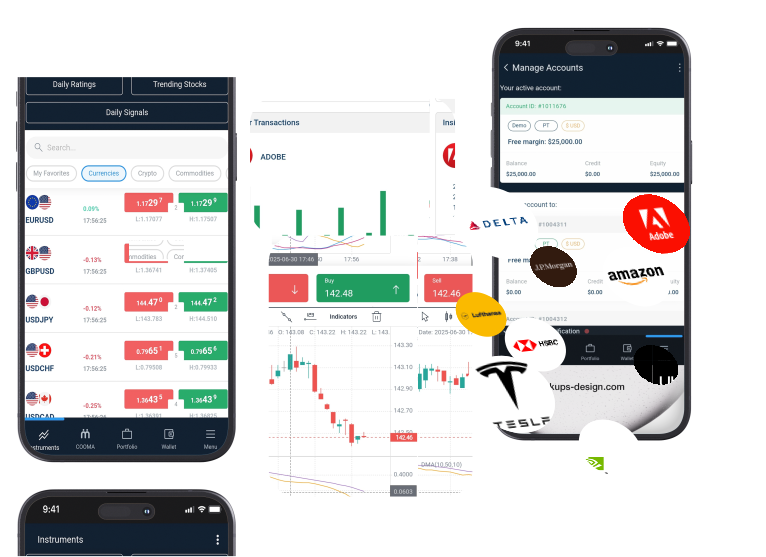
- User-Friendly Interface Afaq’s platform is designed with an intuitive interface that simplifies the process of setting up and managing automated trades. Real-time dashboards provide clear visibility into account performance, open trades, and strategy effectiveness, making it easy for traders at all levels to stay in control of their positions.
- Advanced Automation Tools Afaq supports the creation and deployment of custom Expert Advisors (EAs) using MQL5 within the MetaTrader 5 (MT5) platform, enabling traders to automate complex strategies with precision. For those who prefer a simpler approach, Afaq’s Copy Trading feature allows users to automatically replicate the trades of successful investors within the community — making it an ideal starting point for beginners.
- Robust Risk Management Features Automated stop-loss and take-profit orders are built into every trade to minimize potential losses. Dynamic position sizing adjusts trade volumes based on account balance and risk tolerance, while customizable risk parameters allow traders to align their strategies with their personal preferences.
- Comprehensive Backtesting and Optimization Afaq trade provides powerful backtesting tools that simulate trades using historical data, helping traders refine their strategies before live deployment. Optimization tools fine-tune parameters to maximize profitability while reducing drawdowns, ensuring strategies are tested across a wide range of market conditions before going live.
- Advanced Trading Features Afaq supports algorithmic trading strategies, including high-frequency trading and scalping, for experienced traders seeking precision execution. Traders can also automate strategies across multiple asset classes, including forex, stocks, commodities, indices, and cryptocurrencies — all from a single platform.
- Educational Resources and Support Afaq offers a wealth of educational materials, including tutorials, webinars, and guides, to help users understand automated trading concepts. Dedicated customer support is available to assist with technical issues or strategy-related questions, and an active trading community allows traders to share insights and experiences with peers.
- Transparency and Security Afaq prioritizes the security of client funds through encrypted connections and segregated accounts. Transparent pricing models ensure users understand all costs associated with trading, and regular platform updates maintain reliability and performance.
- Demo Account for Practice Afaq offers a free demo account where users can test automated strategies with virtual funds before risking real capital. The demo environment mirrors live trading conditions, allowing traders to refine their approaches and build confidence before transitioning to live markets.
FAQs
Can beginners use automated forex trading systems?
Yes, beginners can use automated forex trading systems, especially those designed with simple interfaces and built-in risk management tools. These systems help reduce emotional trading decisions and execute trades automatically based on predefined strategies. However, beginners should still learn the basics of forex trading and test the software on a demo account before using real money.
What is the best strategy for automated forex trading?
The best strategy for automated forex trading depends on the trader’s goals, risk tolerance, and market conditions. Popular strategies include trend-following, scalping, breakout trading, and grid trading systems. Successful traders often combine automation with proper risk management, regular monitoring, and backtesting to improve long-term performance.
How do you choose the best automated forex trading software?
Traders should choose automated forex trading software based on reliability, performance history, ease of use, and compatibility with trading platforms like MT4 or MT5. It is also important to look for features such as customizable settings, backtesting tools, and strong security measures. Reading user reviews and testing the software on a demo account can help traders make safer decisions.